
Safeguarding
As a school, we are committed to safeguarding and promoting the welfare of our pupils. We recognise that everyone who comes into contact with children has a duty to safeguard and promote children’s welfare.
We ensure that all appropriate measures are applied in relation to everyone who works in the school, including governors and volunteers. All members of staff therefore, are required to have an enhanced DBS check and are not allowed to start work at the school until this check has been completed. All staff are trained in using our reporting and recording system CPOMS.
Our Designated Safeguarding Lead (DSL) is:
Kristel Norris, DSL and Assistant Headteacher for SEND
Our Deputy Designated Safeguarding Leads (DDSLs)are:
| Kat Swales, Student Needs Co-ordinator | |
| Cathy Berridge, Early Help Co-ordinator | |
|
Matt Jarvis, Early Help Co-ordinator |
Our Safeguarding Governor is:
Jo Worsley
Keeping children safe is of paramount importance and therefore we keep information on all staff on the Single Central Register. All staff are vetted against safer recruitment checks. Our Designated Safeguarding Leads are all Level 3 trained and receive regular additional training and updates.
If you have any concerns related to the safety of a child at Lampard, please do not hesitate to contact the school:
Tel: 01271 345416
Email: safeguarding@lampard.devon.sch.uk
Or you can contact MASH (the Multi-Agency Safeguarding Hub, now known as Devon Children's Front Door)
Tel: 0345 155 1071
Email: mashsecure@devon.gov.uk
Devon Safeguarding Children Partnership: https://www.devonscp.org.uk/
Safeguarding
Safeguarding is everyone's responsibility
At Lampard Community School, we recognise our moral and statutory responsibility to safeguard and promote the welfare of all students and we expect all staff, governors and volunteers to share this commitment. We endeavour to provide a safe and welcoming environment where children are respected and valued. We are alert to the signs of abuse and neglect and follow our procedures to ensure that children receive effective support, protection and justice. We listen to our students and take seriously what they tell us, children are aware of the adults they can talk to if they have a concern.
We have a Child Protection and Safeguarding policy in place which guides our procedures and protocols. All staff (including supply staff, volunteers and governors) must ensure that they are aware of these procedures. Parents and carers are welcome to read the policy on request from Reception.
When there are concerns for a child’s welfare we may need to share information and work in partnership with other agencies. We will ensure concerns are discussed with parents/carers first unless we have reason to believe that by doing so would be contrary to the child’s welfare.
Child protection forms part of the school’s safeguarding responsibilities and we take a zero-tolerance approach to abuse.
Our Designated Safeguarding Lead is:
Kristel Norris, DSL and Assistant Headteacher for SEND
Our Deputy Designated Safeguarding Leads are:
Kat Swales, Student Needs Co-ordinator
Cathy Berridge, Early Help Co-ordinator
Matt Jarvis, Early Help Co-ordinator
Our Safeguarding Governor is:
Jo Worsley
If you would like to know more about safeguarding at Lampard please email us at safeguarding@lampard.devon.sch.uk or call 01271 345416
Operation Encompass
Our school is part of Operation Encompass. This is a police and education early intervention safeguarding partnership which supports children and young people who experience Domestic Abuse. Operation Encompass means that the police will share information about Domestic Abuse incidents with our school PRIOR to the start of the next school day when they have been called to a domestic incident. We have staff trained as Key Adults to receive this information and to ensure support is put in place for the student.
You can find more information on the Operation Encompass website by clicking here
Key Principles of Operation Encompass
What to do if you are worried about a child or young person
The Devon Children and Families Partnership provides lots of useful information about keeping children safe and also guidance on what to do if you are worried about a child or young person. The website is:
Devon Children and Families Partnership
The Multi-Agency Safeguarding Hub (MASH) is the key contact for any enquiries about child protection. Their contact details are: 0345 155 1071 or out of hours 0845 6000 388. If you are worried that a child or young person is in immediate danger please contact the police on 999 and for non-emergencies 101.
The NSPCC is good resource for information and guidance on safeguarding. They have a dedicated helpline for if you are worried about a child or young person. Their details are:
Helpline: 0808 800 5000
Keeping Children Safe from Abuse and Harm
Online safety
We help our students to stay safe online. Technology is constantly changing and we need to keep up to date with the latest ways to safeguard children.
CEOP (formally the Child Exploitation and Online Protection Centre) has the latest information on keeping children safe online and has a dedicated section for parents and carers. It can be found here:
If you are worried about a child or young person’s safety online, if they are involved in inappropriate contact with someone online you can report it directly to CEOP using this button:

If someone is in immediate danger, contact the Police on 999.
Zero Tolerance to Hate Crime
We have joined Devon and Cornwall Polices' Zero Tolerance to Hate Crime campaign. This means we are pledging to take a zero tolerance approach to all forms of hate crime in addition to promoting respect for all.
Radicalisation
“Radicalisation” refers to the process by which a person comes to support terrorism and forms of extremism leading to terrorism. During that process it is possible to intervene to prevent vulnerable people being drawn into terrorist-related activity.
‘Prevent’ relates to the Counter Terrorism and Security Act 2015 which came into force on 1 July 2015.
Since July 1 2015 there has been a duty on schools to have ‘due regard to the need to prevent people from being drawn into terrorism’. This is called the Prevent duty. Prevent is part of the Government’s counter terrorism strategy. Its aim is to stop more people from becoming terrorists or supporting terrorism in all its forms.
If a member of staff has a concern about a particular student they should follow the school’s normal safeguarding procedures.
Parents and carers can find out more at:
Government Guidance - Prevent
Government Guidance - Safeguarding
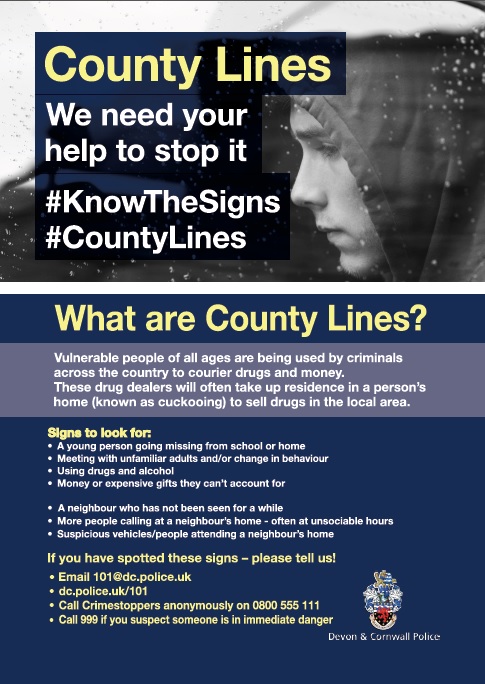
Child Sexual Exploitation (CSE)
Sexual exploitation is a form of sexual abuse, in which a young person is manipulated or forced into taking part in a sexual act. This could be as part of a seemingly consensual relationship, or in return for attention, affection, money, drugs, alcohol or somewhere to stay. The young person may think that their abuser is their friend, or even their boyfriend or girlfriend. But they will put them into dangerous situations, forcing the young person to do things they don’t want to do. The abuser may physically or verbally threaten the young person, or be violent towards them. They will control and manipulate them, and try to isolate them from friends and family.
Further information can be found on the NSPCC website:
Safer Recruitment
We want to appoint the best possible staff to work at Lampard and we take great care to ensure that all necessary safeguarding procedures and checks are carried out.
At least one person on the shortlisting and interview panel has undertaken Safer Recruitment Training.
Current staff who have undertaken this training are:
| Jennie Harvey | Head Teacher |
| Tamsin Winter | Deputy Head Teacher |
| Alison Rubenchik | School Business Manager |
| Kristel Norris | DSL and Assistant Headteacher responsible for SEND |
| Sophia Marquiss | Assistant Headteacher responsible for Digital Teaching and Learning |
Online Safety For Parents & Carers
Top Tips for Keeping Your Child Safe Online
- Talk to your child about what they’re up to online. Be a part of their online life; involve the whole family and show an interest. Find out what sites they visit and what they love about them, if they know you understand they are more likely to come to you if they have any problems. Watch Thinkuknow films and cartoons with your child. The www.thinkuknow.co.uk/parents has films, games and advice for child from five all the way to 16. http://www.thinkuknow.co.uk/parents/Support-tools/home-activity-worksheets/ has lots of information for parents and carers around online safety.
- Encourage your child to go online and explore! There is a wealth of age-appropriate sites online for your children. Encourage them to use sites which are fun, educational and that will help them to develop online skills.
- Keep up-to-date with your child’s development online. Children grow up fast and they will be growing in confidence and learning new skills daily. It’s important that as your child learns more, so do you.
- Set boundaries in the online world just as you would in the real world. Think about what they might see, what they share, who they talk to and how long they spend online. It is important to discuss boundaries at a young age to develop the tools and skills children need to enjoy their time online.
- Keep all equipment that connects to the internet in a family space. For children of this age, it is important to keep internet use in family areas so you can see the sites your child is using and be there for them if they stumble across something they don’t want to see.
- Know what connects to the internet and how. Nowadays even the TV connects to the internet. Make sure you’re aware of which devices that your child uses connect to the internet, such as their phone or games console. Also, find out how they are accessing the internet – is it your connection, or a neighbour’s wifi? This will affect whether the safety setting you set are being applied.
- Use parental controls on devices that link to the internet, such as the TV, laptops, computers, games consoles and mobile phones. Parental controls are not just about locking and blocking, they are a tool to help you set appropriate boundaries as your child grows and develops. They are not the answer to your child’s online safety, but they are a good start and they are not as difficult to install as you might think. Service providers are working hard to make them simple, effective and user friendly. There is a link on the 'Think u Know' website which can help you find your service provider and set your controls.
- Help your child to understand that they should never give out personal details to online friends—personal information includes their messenger ID, email address, mobile number and any pictures of themselves, their family and friends. If your child publishes a picture or video online, anyone can change it or share it. Remind them that anyone could be looking at their images!
- If you child receives spam/junk email and texts, remind them never to believe them, reply to them or use them. It’s not a good idea for your child to open files from people they don’t know. They won’t know what they contain—it could be a virus or worse - an inappropriate image or film.
- Help your child to understand that some people lie online and therefore it’s better to keep online mates online. They should never meet up with any strangers without an adult they trust.
- Teach your child how to block someone online and how to report them if they feel uncomfortable
To find out more, visit the links below.
CEOP
Child Net
Digizen
Get Net Wise
Internet Matters
Internet Matters - Leaflets
Think U Know
If you are worried about a child or young person’s safety online, if they are involved in inappropriate contact with someone online you can report it directly to CEOP using this button:
If you have any concerns about your child's safety on the Internet or you would like more information on online safety, please do not hesitate to contact one of the above organisations or one of our Designated Safeguarding Leads via our email safeguarding@lampard.devon.sch.uk.
Advice taken from Think U know
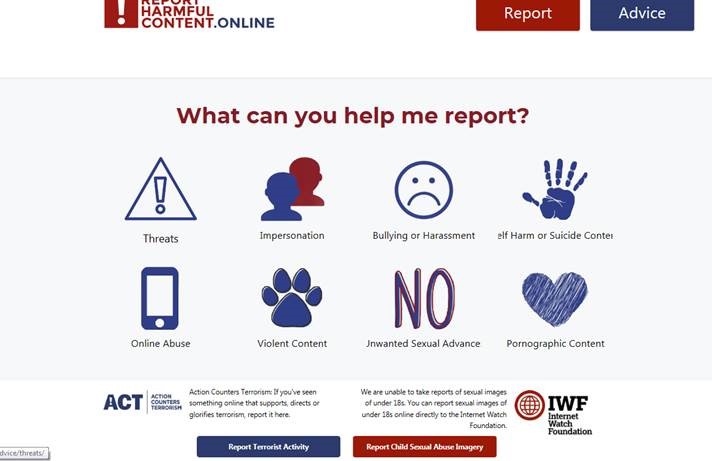
Reporting Harmful Content
There is a new tool for reporting harmful content online. The site has been created by the UK Safer Internet Centre and South West Grid for Learning. To report harmful content please click on the 'Report Harmful Content' text below
Safeguarding Advice for Parents and Carers
Here are some useful links and advice to support you in making sure everyone stays safe online